


More Space for Cargo
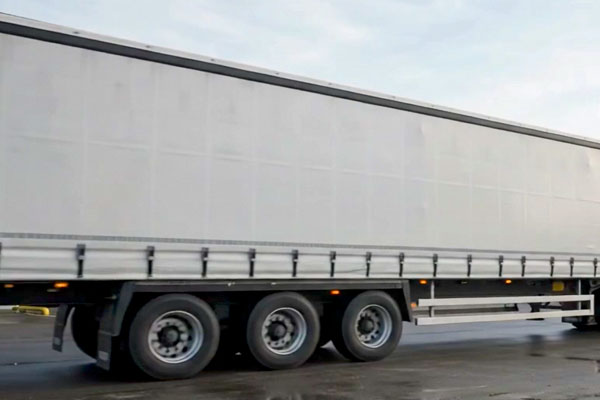
This is where the extended semi-trailer can demonstrate its advantages. The additional length provides more usable loading space and makes it possible to transport more goods on a single journey, depending on the loading configuration. Depending on the body design and loading arrangement, for example, up to three additional Euro pallet spaces may be available.
Looking at individual journeys, this increase may initially seem relatively small. However, on regularly operated routes with high transport volumes, the additional capacity can quickly add up.
More cargo per vehicle means greater transport capacity per journey.
Fewer Journeys Can Mean Lower CO₂ Emissions
The additional transport capacity offers another important advantage: If the same quantity of goods can be transported with fewer journeys, resources can be used more efficiently. This applies to both fuel or energy consumption and the resulting CO₂ emissions. The decisive factor is not simply how much energy an individual vehicle consumes, but how much cargo is actually transported using that energy.
The Long Truck Type 1 therefore follows a practical approach: Instead of focusing exclusively on improving the efficiency of the vehicle itself, it also optimises the available transport space. Particularly in volume-limited transport operations, this can reduce energy consumption and CO₂ emissions per unit transported. The actual savings depend on several factors, including cargo type, vehicle utilisation, route, and operating conditions.
An Additional 1.30 Metres Brings New Requirements
Increasing vehicle length also presents new challenges for vehicle bodies and components. A 14.90-metre-long semi-trailer must be just as reliable, flexible, and easy to operate in everyday use as its 13.60-metre counterpart. This is particularly important for components that extend over a large part of the vehicle's length.
These also include the sliding roof systems from EdschaTS.
As the vehicle body becomes longer, the overall design changes, along with the requirements for guide rails, roof bows, tarpaulin guidance, and the entire sliding roof construction. At the same time, the additional length must not make opening and closing the roof unnecessarily complicated or time-consuming.
After all, additional transport capacity only provides a real advantage if it can also be used efficiently.
The Sliding Roof as Part of the Overall Concept
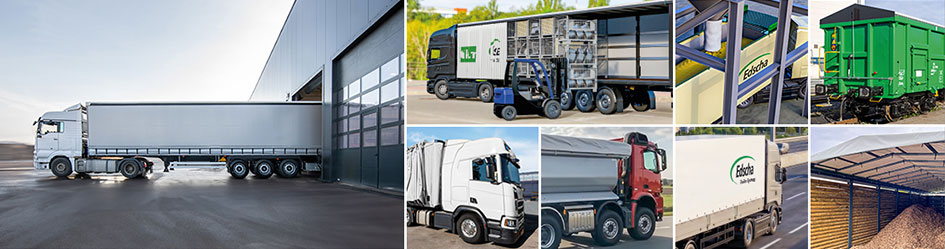
For decades, Edscha Trailer Systems has been developing solutions that provide fast and flexible access to cargo spaces. Sliding roof systems play an important role in this regard. They allow large sections of the vehicle body to be opened, creating ideal conditions for a wide range of loading and unloading operations.
This also applies to extended vehicle concepts.
A Small Contribution to Addressing the Driver Shortage
In addition to the economic and environmental benefits, the Long Truck Type 1 can also help ease the ongoing shortage of personnel in the transport industry. Germany already faces a shortage of more than 100,000 professional drivers – a challenge affecting the entire logistics sector.
Thanks to the increased loading volume, suitable transport operations can move more goods with fewer journeys. This reduces the number of drivers required relative to the quantity of goods transported, without necessarily increasing the workload of individual drivers.
Although the Long Truck Type 1 cannot solve the driver shortage, it can make a small contribution by allowing existing driver capacities to be used more efficiently and helping to ease the pressure on the industry in the long term.
Efficiency Starts with the Vehicle Concept
The transformation of road freight transport is often associated with alternative drive systems, digitalisation, and new vehicle technologies. However, making better use of existing transport capacities also offers considerable potential.
The Long Truck Type 1 is a good example of this.
With a semi-trailer length of 14.90 metres instead of 13.60 metres, additional loading space becomes available. For suitable transport operations, this allows more cargo to be carried on a single journey. If this reduces the number of journeys required, energy consumption and CO₂ emissions per unit transported can also be reduced.
This demonstrates that efficiency in freight transport does not depend on a single component. The vehicle, body design, loading concept, and sliding roof systems must all be considered together. For Edscha Trailer Systems, the development of new and longer vehicle concepts therefore also means continuously adapting its sliding roof solutions to meet the requirements of modern transport operations.
Because regardless of whether a semi-trailer measures 13.60 or 14.90 metres, the goal remains the same.